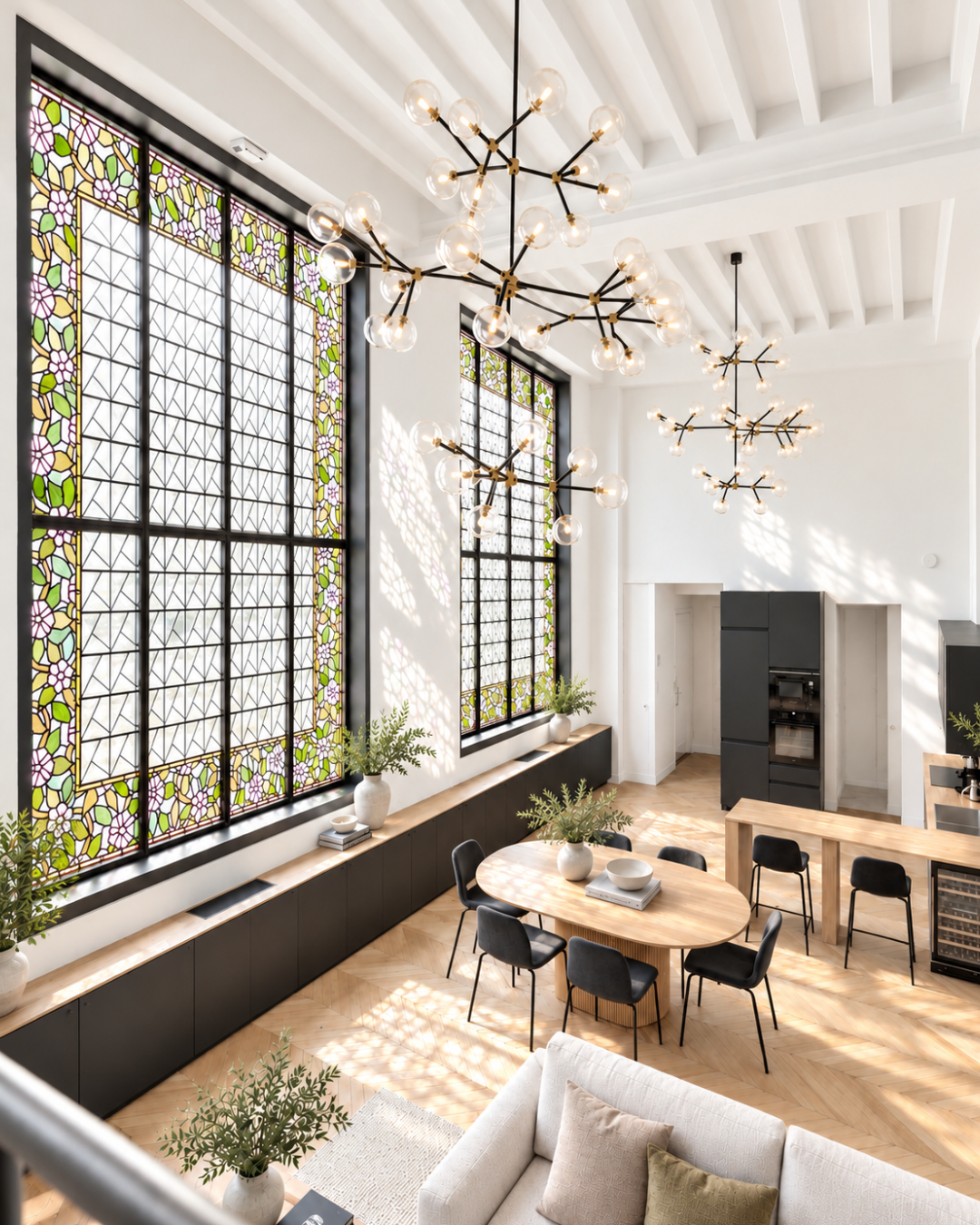
The quiet architecture of atmosphere.
Light is one of the most influential elements in an interior, yet it is often among the least visible.
It shapes the way we perceive space, reveals architectural details and creates an atmosphere that changes throughout the day. A room can feel entirely different in the soft light of morning, beneath the afternoon sun or in the gentle glow of an evening lamp.
In a Parisian residence, where architecture and natural light are so closely connected, thoughtful illumination becomes an essential part of interior design.
01 — Understanding the layers of light
A well-lit interior rarely relies on a single source.
Instead, it combines several layers, each serving a different purpose.
Ambient lighting provides general illumination, allowing a room to function comfortably. Task lighting supports specific activities such as reading, cooking or working. Accent lighting introduces depth, drawing attention to artwork, architectural features or carefully chosen objects.
Together, these layers create a more adaptable interior.
A living room may require generous illumination during the day, a focused reading light in the afternoon and a softer atmosphere in the evening.
The objective is not simply brightness, but balance.
02 — The importance of natural light
Natural light brings a particular quality to Parisian interiors.
Tall windows, traditional shutters and the proportions of Haussmannian apartments create subtle variations in light throughout the day.
Rather than obstructing these qualities, interior design can work with them.
Light curtains soften direct sunlight while preserving brightness. Mirrors can reflect daylight into darker corners, while pale walls and natural materials help distribute light throughout a room.
The placement of furniture also matters.
A reading chair positioned near a window or a dining table benefiting from afternoon light can make ordinary daily rituals feel more considered.
03 — Lighting as an architectural detail
Beyond its practical function, a luminaire can become part of a room’s architectural composition.
A sculptural ceramic lamp introduces form and texture. A brass wall sconce can complement traditional mouldings. A discreet pendant above a dining table creates a visual centre without overwhelming the space.
The most successful choices feel connected to their surroundings.
In a classical Parisian apartment, contemporary lighting can provide a subtle contrast to historic details, creating a dialogue between past and present.
Materials such as linen, glass, ceramic and aged metal offer opportunities to introduce warmth without excessive decoration.
04 — Creating atmosphere after dark
Evening lighting requires a different approach.
Rather than illuminating every corner equally, softer pools of light can create intimacy and depth.
A table lamp beside a sofa, a pair of wall sconces framing a doorway or a carefully positioned floor lamp can transform the experience of a room.
Warm-toned light is often particularly effective in living rooms and bedrooms, where relaxation is the priority.
Dimmers offer additional flexibility, allowing residents to adapt the atmosphere to different moments.
The result is an interior that feels welcoming long after natural daylight has disappeared.
05 — The details that make a difference
Thoughtful lighting is also about proportion and placement.
A lamp that is too small may disappear beside a generous sofa, while an oversized pendant can dominate an intimate dining area.
The height of a wall sconce, the position of a bedside lamp and the direction of a reading light all influence comfort.
Practical considerations should remain central.
In kitchens and bathrooms, sufficient illumination is essential. In bedrooms, accessible bedside lighting creates convenience. In workspaces, focused lighting helps support everyday activities.
Beauty and functionality should never be treated as competing priorities.
The Clée Casa Perspective
At Clée Casa, we consider lighting an essential part of feeling at home.
Beyond illuminating a space, it brings warmth, highlights architectural details and creates an atmosphere that feels both intimate and welcoming.
A carefully considered residence should adapt naturally to the rhythms of daily life, from bright mornings to quieter evenings.
Because the beauty of an interior is not only found in what we see, but also in how a space makes us feel.
Explore the art of Parisian living with Clée Casa at www.cleecasa.com.