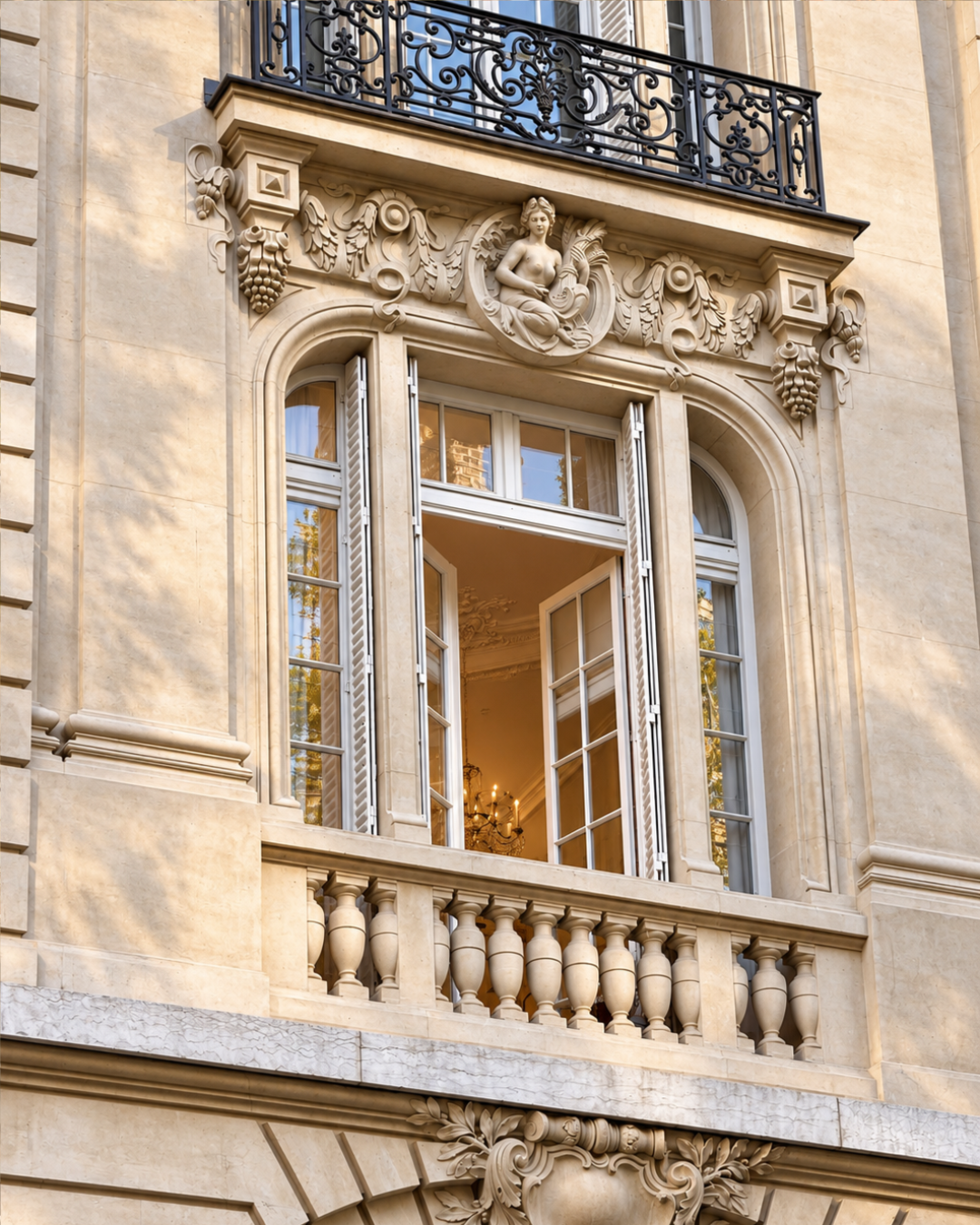
Between Rue du Bac, Rue de Grenelle and the Seine, Saint-Thomas-d’Aquin reveals a quieter expression of Parisian life — one shaped by beautiful architecture, cultural addresses and the pleasure of familiar routines.
There are neighbourhoods in Paris that announce themselves immediately.
Grand avenues, celebrated monuments and lively terraces create an unmistakable sense of place.
Others reveal their character more gradually.
Saint-Thomas-d’Aquin belongs to the latter.
Set within the 7th arrondissement, on the Left Bank, this elegant residential quarter offers a particular combination of architectural heritage, cultural richness and everyday tranquillity.
Behind its discreet entrances lie historic hôtels particuliers. Along its streets, galleries, bookshops and independent boutiques sit comfortably beside neighbourhood cafés and long-established institutions.
It is central Paris, but experienced at a more measured pace.
And therein lies much of its appeal.
01. A Neighbourhood That Reveals Itself Slowly
Saint-Thomas-d’Aquin does not depend on a single landmark to define its identity.
Its charm is found in the relationship between its streets, buildings and the daily life unfolding around them.
A carved doorway along Rue de Grenelle.
An elegant courtyard glimpsed through an open entrance.
The quiet presence of a historic façade, almost hidden among familiar shops and residential buildings.
There is an architectural continuity to the neighbourhood that gives it a particularly harmonious character.
Its streets reflect centuries of Parisian history, yet remain unmistakably lived-in.
This is not a quarter preserved solely for admiration.
It is somewhere people return to at the end of the day, collect flowers on their way home and develop a familiarity with the addresses around them.
The beauty of Saint-Thomas-d’Aquin lies as much in these ordinary moments as in its remarkable architecture.
02. Rue du Bac and the Pleasure of Familiar Addresses
Rue du Bac is one of the neighbourhood’s defining streets.
Connecting the Seine with the southern reaches of the 7th arrondissement, it brings together a collection of shops, cafés, food addresses and boutiques that make it an essential part of everyday life.
Its atmosphere is distinctly Parisian without feeling overly formal.
One might begin the morning with a coffee, stop at a favourite bakery, browse a bookshop or collect something for dinner on the way home.
There is a natural rhythm to the street, shaped by residents as much as visitors.
The surrounding Rue de Grenelle and Rue du Pré-aux-Clercs offer a similarly appealing mixture of residential life, cultural addresses and architectural detail.
Together, these streets create a neighbourhood that feels both established and quietly dynamic.
A place where familiarity becomes part of the pleasure of living.
03. Architecture Behind Discreet Entrances
The 7th arrondissement is known for its remarkable architectural heritage, and Saint-Thomas-d’Aquin offers some particularly beautiful examples.
Historic hôtels particuliers, classical façades and elegant internal courtyards give the neighbourhood a sense of permanence.
Many of its most interesting buildings do not reveal their full character from the street.
Their beauty is often discovered in the details: an ornate entrance, an unexpected courtyard, a beautifully proportioned staircase or the craftsmanship of an old iron gate.
This understated architectural richness is central to the neighbourhood’s identity.
Rather than relying on monumental scale, Saint-Thomas-d’Aquin often expresses its elegance through proportion, materials and restraint.
For those who appreciate historic Parisian interiors, it is a particularly compelling setting.
04. Art, Culture and the Left Bank
Saint-Thomas-d’Aquin occupies an enviable position within the cultural landscape of Paris.
The Musée d’Orsay is within easy reach, offering one of the city’s most important collections of nineteenth- and early twentieth-century art.
Closer to the neighbourhood’s everyday streets, the Musée Maillol provides a more intimate cultural destination, while numerous galleries contribute to the area’s longstanding relationship with art and collecting.
The wider surroundings connect naturally to Saint-Germain-des-Prés, with its literary history, galleries and celebrated cafés.
This proximity gives residents access to a remarkable concentration of cultural institutions without requiring them to live amid the busiest parts of the city.
A museum visit can become an afternoon ritual rather than a special excursion.
A gallery can be discovered unexpectedly during a walk.
Culture becomes part of the neighbourhood’s everyday landscape.
05. A Different Kind of Shopping
One of the pleasures of living in Saint-Thomas-d’Aquin is the variety of shopping experiences within walking distance.
Rue du Bac offers an appealing mix of independent boutiques, food shops and established Parisian names.
Nearby, Le Bon Marché brings a different dimension to the neighbourhood’s retail landscape.
Founded in the nineteenth century, the celebrated department store remains one of the Left Bank’s most distinctive shopping destinations, known for its fashion, home collections and carefully presented selection of brands.
La Grande Épicerie de Paris, on Rue de Sèvres, is equally appealing to those who appreciate exceptional food and the simple pleasure of choosing ingredients for a meal at home.
For residents, these addresses are more than occasional destinations.
They contribute to the ease and richness of everyday life.
The ability to move between a neighbourhood bakery, a small independent shop and an established Parisian institution is part of what makes this area so appealing.
06. The Pleasure of Living on the Left Bank
Saint-Thomas-d’Aquin offers something particularly valuable in a capital as active as Paris: a sense of calm without isolation.
The Seine is nearby, making riverside walks a natural part of the week.
Saint-Germain-des-Prés lies within easy reach, with its restaurants, bookshops and cafés.
The neighbourhood also connects conveniently to the cultural and commercial addresses of central Paris.
Yet returning to its quieter residential streets brings a noticeable change of pace.
For international residents, families and professionals spending an extended period in the city, this balance can be especially attractive.
There is enough happening nearby to make everyday life engaging, but the residential character of the neighbourhood remains central to its appeal.
It offers the possibility of living in Paris rather than simply passing through it.
07. The Clée Casa Address Book
A few addresses that help define the neighbourhood and its surroundings.
Le Bon Marché — Rue de Sèvres
A Left Bank institution, celebrated for its fashion, design and distinctive approach to the department store experience.
Musée d’Orsay — Esplanade Valéry Giscard d’Estaing
One of Paris’s most significant art museums, housed in a former railway station overlooking the Seine.
Beaupassage — Rue de Grenelle
An architectural passage bringing together gastronomy, contemporary design and a quieter courtyard atmosphere.
Musée Maillol — Rue de Grenelle
An intimate museum dedicated to the work of Aristide Maillol, alongside a programme of temporary exhibitions.
Église Saint-Thomas-d’Aquin — Place Saint-Thomas-d’Aquin
The historic church that gives the neighbourhood its name, tucked into the surrounding residential streets.
Together, these addresses reflect the character of this part of the Left Bank: cultural, refined and closely connected to everyday Parisian life.
08. The Clée Casa Perspective
Some neighbourhoods are chosen for their energy. Others for their convenience, architecture or proximity to the city’s best-known addresses.
Saint-Thomas-d’Aquin brings these qualities together with an additional sense of discretion.
Its elegant streets, established local shops and remarkable cultural surroundings create a residential setting that feels distinctly Parisian without becoming theatrical.
For those considering an extended stay in the capital, it offers a particularly appealing balance between centrality and calm.
A place where the pleasure of living is found in familiar addresses, beautiful surroundings and the freedom to move through Paris at one’s own pace.
Saint-Thomas-d’Aquin is not a neighbourhood that needs to attract attention. Its character speaks for itself.
L’Adresse by Clée Casa — Exploring the Parisian neighbourhoods we call home.